Confluence of Nirgal and Uzboi Valles
HiRISE Image PSP_003565_1495     (Center Lat, Lon °E: -29.79, 322.58)

Download Browse Image
1.8 MByte JPEG
(map-projected, scale bar)
Download Full-Scale Image
1.87 GByte TIFF
(not map-projected)
Image Webpage
HiRISE
Operations Center
Image Caption
from suggester
& researcher

Zoom and pan using the toolbar.    Click in the map to zoom in, or click-and-drag in the map to pan.   Drag red rectangle in overview to move location.

Context Map
(approximate location of image)

Click to view larger region.
Thermal Emission
Imaging System
Mosaiced Digital
Image Model
Mars Orbiter
Laser Altimeter
Map Display  
THEMIS MDIM MOLA
Image Mosaic Image Mosaic Elevation Map


Image Caption

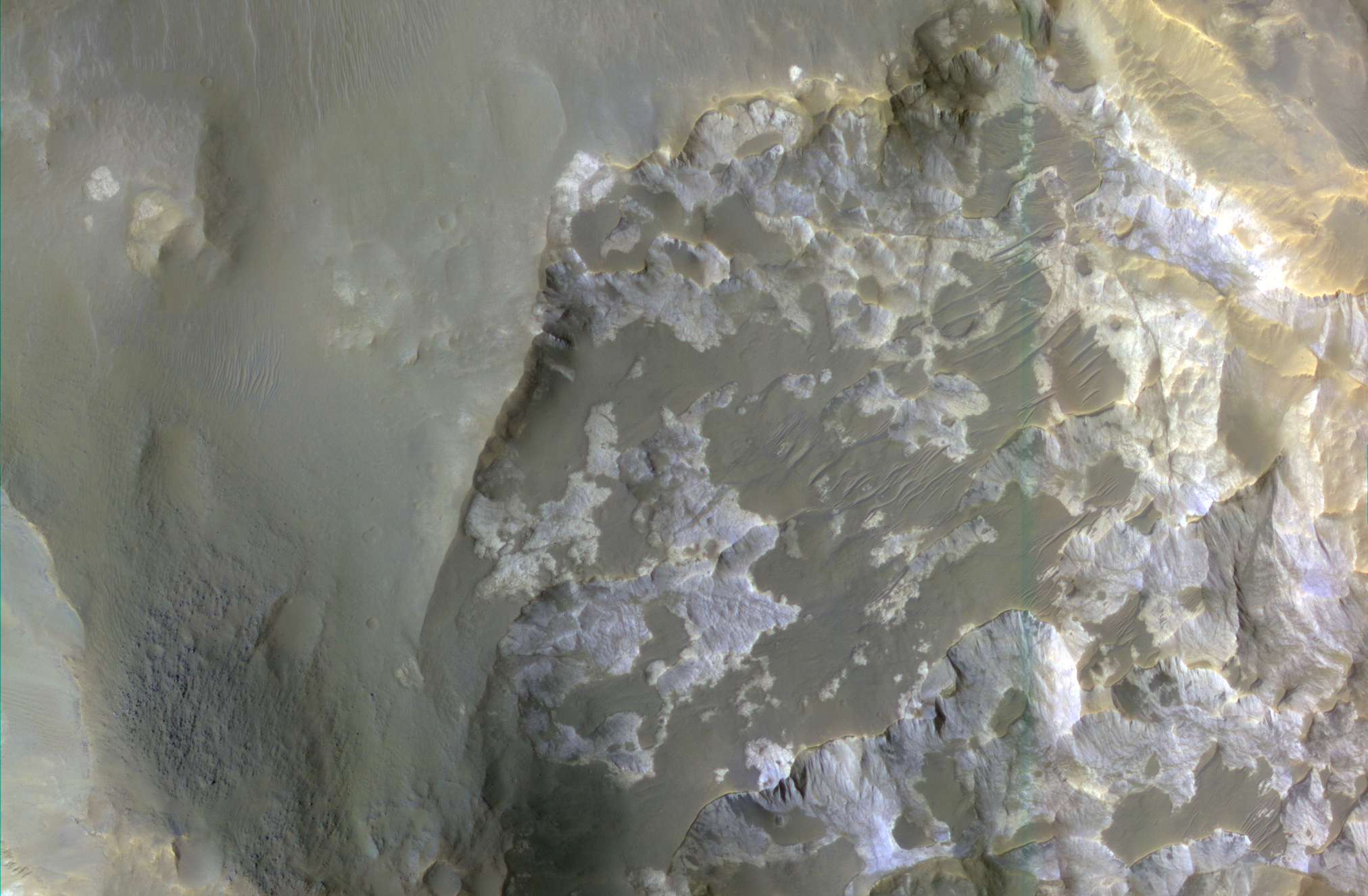
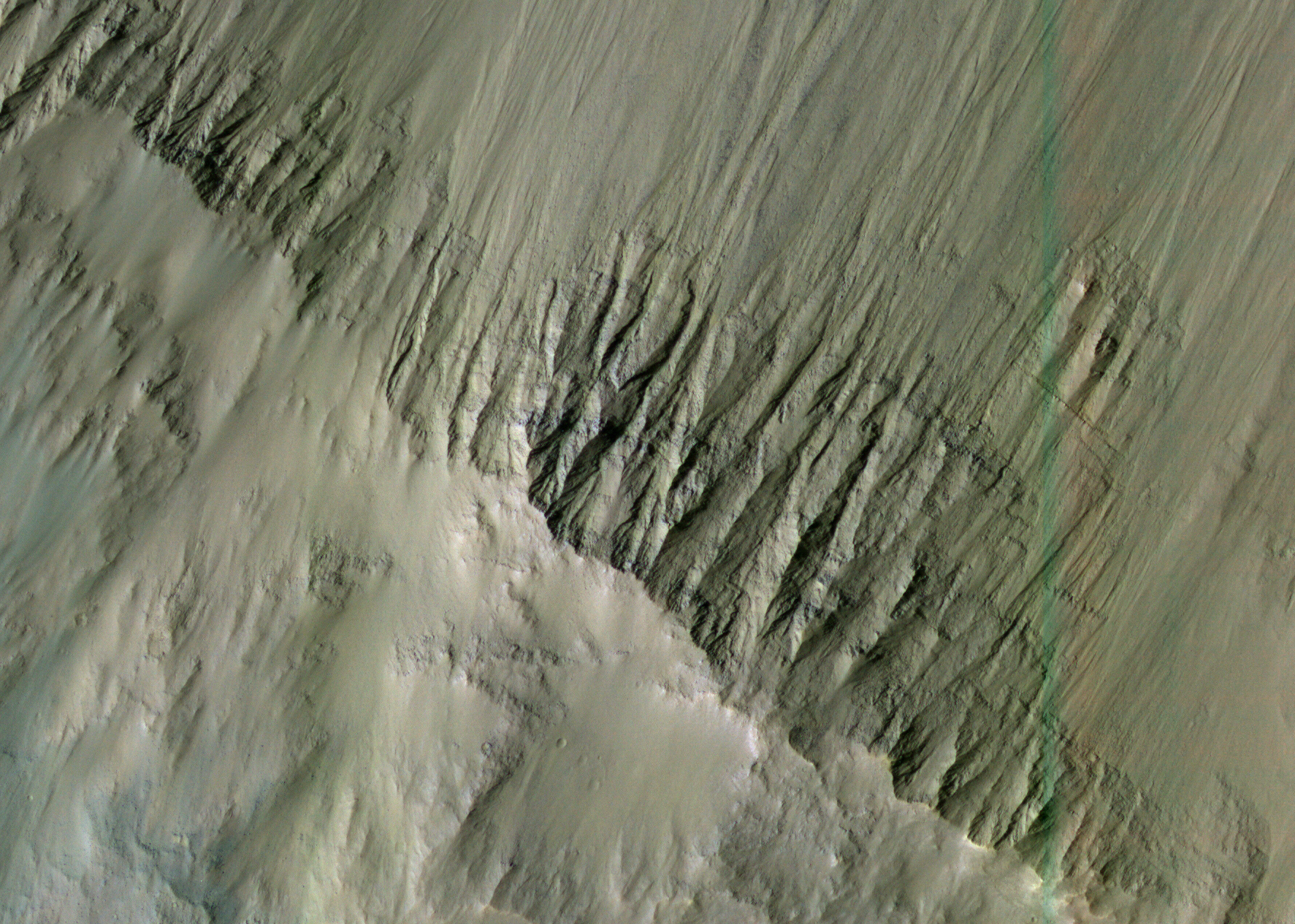
This target was suggested by Jonna Sotelo Douglas in Tucson, Arizona. She writes: "This image is of the confluence of the Nigral and Uzboi Valles and part of the southern rim of Luki crater. The confluence area is marked with dunes, boulders, and other types of sediment formations. As the elevation lowers from the crater wall, the area smoothes out. There are gullies on both sides of the crater wall."

Nirgal and Uzboi Valles are two valleys to the north of the Argyre impact basin in the southern hemisphere. At this location, the smaller channel, Nirgal Vallis, empties out into the larger Uzboi Vallis.

Most of the features in this image are covered by the dust that is ubiquitous on Mars, hiding the original fluvial features. However, a small patch of resistant outcrop can be observed on the southern side of the crater rim. These appear as white patches that are draped by the darker wind-blown rippled sand (see subimage 1). Even the resistant outcrop has been modified by wind, giving it a pockmarked or scalloped texture.

Layering can be seen in the resistant outcrops and in the gullied inner wall of the crater (see subimage 2). These layers may have been fluvial, volcanic, or aeolian (wind-blown). Given their presence within the valley floor, these may represent some of the sedimentary layers deposited by water when it flowed through the valley.